Chapter II.3 · Culture
Proximity Bias and Favouritism at Work: What Happens When Merit Becomes Optional
When access to decision-makers matters more than results, a quiet inner circle forms. How proximity culture develops, what it does to performance, and what leaders can do about it.
Key takeaways
- Proximity culture is when access to decision-makers predicts advancement better than performance does. It is rarely announced and rarely intended.
- It forms in a predictable sequence and compounds over time, because people in power tend to promote people like themselves.
- Its costs are concrete: discretionary effort disappears, effort shifts from delivery to positioning, the best people leave, and honest feedback goes silent.
- Teams notice three moments in particular: a mistake forgiven for an insider and escalated for an outsider, a project given by relationship, and a weaker insider argument winning.
- Leaders can counter it structurally: explicit allocation criteria, evaluation separated from relationship, naming the pattern, and protecting people outside the circle.
On this page
El Hassane Ben Ahmed’s first encounter with proximity culture came in a team that publicly treated performance as its organising principle. At first the claim was credible. Objectives were clear, expectations were high and people were engaged.
Then small things began to stand out. A colleague was given a key project without a clear reason. A mistake was quietly overlooked for one person while similar errors were escalated for others. Some voices carried more weight even when their arguments were weaker. Nothing was obvious enough to challenge. But over time it became predictable: the same people moved faster, had more room for error and were always close to decisions.
It was no longer about competence. It was about proximity. There was a circle, never defined and never acknowledged, but clearly present. Inside it, the rules adapted. Outside it, they applied.
That, the author writes in Chapter II.3 of The Lessons That Stayed, was the moment the team changed. People kept working, but they no longer trusted work alone to determine outcomes.
“Once merit becomes optional, people do not stop performing. They stop performing for its own sake and start performing for belonging. That shift changes everything.”
The circle nobody names
Meritocracy holds that advancement, recognition and opportunity should follow performance and capability rather than relationship, background or political positioning. Most organisations say they believe in it. The violation is rarely dramatic, which is exactly why it is so hard to address.
How proximity culture forms
The book defines proximity culture as the condition in which access to decision-makers, inclusion in informal networks and personal familiarity with those who allocate opportunities become more predictive of advancement than performance. It tends to form in a predictable sequence:
- A leader develops closer working relationships with a few people, often for understandable reasons: shared history, similar style, physical proximity.
- Those people receive more information, earlier, and are consulted more often.
- Because they are better informed and more visible, their work looks stronger, and they receive the next important assignments.
- Their success is read as proof of merit, which justifies further access.
In-group favouritism works below awareness
Research in social psychology consistently shows that in-group favouritism operates largely without conscious intent. Leaders who favour their circle usually believe they are simply recognising talent.
It compounds
Rosabeth Moss Kanter documented how people in power tend to reproduce themselves in their selections and promotions. Each round of decisions makes the circle more homogeneous and the gap between inside and outside wider.
What it does to performance
The chapter describes four consequences that are both well documented and predictable.
Discretionary effort disappears
Dennis Organ’s research on organisational citizenship behaviour showed that much of the difference between adequate and exceptional organisations comes from discretionary effort: work beyond the formal job description. People give that effort when they believe it will be recognised fairly. In proximity cultures, they stop.
Effort moves from delivery to positioning
Rational professionals redirect energy from the work itself to the political work of building and keeping access to the circle. The organisation pays for that effort and receives nothing from it.
The people with options leave
Research on voluntary turnover consistently finds that the employees most likely to leave environments they experience as unfair are the ones whose market value gives them real alternatives. Favouritism quietly selects for people who cannot leave.
Honest feedback goes silent
When the cost of disagreeing with an insider is exclusion, people stop disagreeing. Amy Edmondson’s work on psychological safety shows how much learning and performance depend on that disagreement.
The moment the team changes
The change is rarely a single event. The book identifies three recurring moments that tell a team the rules have shifted:
- A mistake is overlooked for someone inside the circle and escalated for someone outside.
- A project is allocated based on relationship rather than capability.
- A weaker argument from an insider carries more weight than a better one from an outsider.
“People can absorb disappointment. They are remarkably resilient when they believe the system is fundamentally fair. What they cannot sustain is the discovery that the system has different rules for different people.”
What leaders can do
The chapter applies the same logic to organisations.
Make allocation explicit
Write down the criteria for important assignments, promotions and opportunities before decisions are made. Criteria decided afterwards will always fit the person already chosen.
Separate evaluation from relationship
Design performance evaluation so that personal familiarity has as little influence as possible: multiple evaluators, evidence-based ratings, calibration across teams.
Name what you see
The single most powerful intervention, according to the book, is to say it out loud. A leader who tells a team “I’ve noticed our standards aren’t being applied consistently, and I want to understand why” changes what everyone believes is acceptable.
Protect the people outside the circle
The cost of proximity culture falls hardest on those without access to the informal network: remote workers, quieter colleagues, newer hires, people who differ from the leadership group. Deliberately give them access to information, decision-makers and visible work.
If you are outside the circle
- Keep a written record of your results and their impact, so evaluation can rely on evidence.
- Build relationships with several decision-makers rather than depending on one.
- Ask explicitly what the criteria are for the opportunities you want.
- Watch the three moments described above. If they become routine, take the pattern seriously.
- Ask the harder question: is this environment designed to see performance at all?
The cost of optional merit
Proximity culture is not usually the product of bad intentions. It is the product of normal human preferences operating without structural checks. That is why its most useful lesson is diagnostic. Ben Ahmed eventually left the team he describes at the beginning of the chapter, and the question he took with him is the one the chapter ends on.
“The question is never only whether you can perform. It is whether the environment you are performing in is designed to see performance at all.”
Frequently asked questions
What is proximity bias?
The tendency to favour people who are physically or socially closer to decision-makers. In the book’s terms, proximity culture is the condition in which access, informal networks and personal familiarity become more predictive of advancement than performance.
How do I know if my workplace has an inner circle?
Look for patterns: the same people getting key projects without clear rationale, mistakes treated differently depending on who made them, and some voices carrying more weight even when their arguments are weaker.
Why does favouritism hurt performance?
Because people stop performing for its own sake and start performing for belonging. Discretionary effort drops, energy goes into positioning, capable people with options leave, and those who remain stop giving honest feedback.
What can a manager do to prevent proximity bias?
Make allocation criteria explicit and documented, design evaluations that reduce the weight of personal relationships, name the pattern openly when you see it, and actively create access for people outside the informal network.
Sources
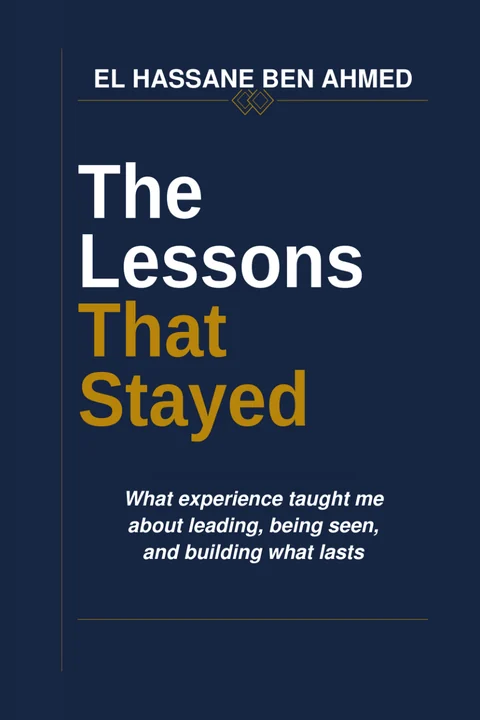
This essay is adapted from Chapter II.3 of The Lessons That Stayed by El Hassane Ben Ahmed (2026). Quotations are from the book.
- Kanter, R.M. (1977) Men and Women of the Corporation
- Organ, D.W. (1988) Organizational Citizenship Behavior
- Hogan, R. and Kaiser, R.B. (2005) ‘What we know about leadership’, Review of General Psychology
- Edmondson, A.C. (2019) The Fearless Organization
- Lewin, K. (1951) Field Theory in Social Science
- Michels, R. (1911) Political Parties
- Madison, J. (1788) The Federalist No. 51