The Journal
Ideas that stayed
Essays on recognition, culture, structure and performance at work, adapted from the twenty chapters of The Lessons That Stayed by El Hassane Ben Ahmed.
22 essays · 4 parts
GuideThe Lessons That Stayed: Book Summary, Themes and Key LessonsA complete overview of The Lessons That Stayed by El Hassane Ben Ahmed: its argument, its four parts and twenty chapters, the lessons it draws, and who it is written for.7 min read GuideLeadership Lessons from History: 20 Figures and What They Teach About Work TodayTesla, Rosalind Franklin, Lincoln, Mandela, Shackleton, Eisenhower and more: the historical figures that open the chapters of The Lessons That Stayed, and the workplace lessons each one illuminates.7 min read
Part I
Recognition
On being seen for what you actually contributed
Chapter I.1 · Recognition
Why Good Work Goes Unnoticed, and How to Make Your Contribution Visible
Excellent work does not always speak for itself. Why contribution becomes invisible inside organisations, and the practical habits that make it visible without self-promotion.
8 min read
Chapter I.2 · Recognition
When Your Manager Takes Credit for Your Work: Why It Happens and What to Do
Credit appropriation is a structural feature of hierarchies, not a rare betrayal. How it works, how to tell it apart from good leadership, and how to protect your contribution.
8 min read
Chapter I.3 · Recognition
When Your Manager Has Already Made Up Their Mind About You
First impressions harden into fixed judgements, and working harder rarely changes them. How pre-formed judgement works, what can still be changed, and when to stop seeking approval.
6 min read
Chapter I.4 · Recognition
Should You Quit Your Job Without Another One Lined Up?
Sometimes the real reason to leave is quiet: your future is no longer being built where you are. A framework for deciding whether staying costs more than leaving, and how to exit well.
6 min read
Chapter I.5 · Recognition
When You Do Everything Right at Work and It Still Does Not Work
Sometimes the environment, not the effort, is the problem. How to tell persistence from denial, recognise structural incompatibility, and keep your standards when outcomes disappoint.
7 min read
Part II
Culture
On the environments we build and the ones we endure
Chapter II.1 · Culture
Fear-Based Leadership: Why Intensity Is Not Impact
Shouting, public criticism and pressure can move numbers in the short term. The evidence shows they destroy the trust and psychological safety that real performance depends on.
6 min read
Chapter II.2 · Culture
Leading Across Cultures: Why Your Leadership Playbook Does Not Travel
Expatriate and international leaders often find that what worked at home fails abroad. How cultural intelligence turns a fixed leadership style into an adaptable toolkit.
6 min read
Chapter II.3 · Culture
Proximity Bias and Favouritism at Work: What Happens When Merit Becomes Optional
When access to decision-makers matters more than results, a quiet inner circle forms. How proximity culture develops, what it does to performance, and what leaders can do about it.
7 min read
Chapter II.4 · Culture
Inconsistent Leadership: The Most Dangerous Leadership Trait No One Talks About
The quiet gap between what a leader says and what they do damages teams more than cruelty or incompetence. How inconsistency appears, why leaders do not see it, and how to fix it.
7 min read
Chapter II.5 · Culture
When Leaders Break the Rules They Enforce: Double Standards and Selective Discipline
Rules that apply downward but not upward turn respect into compliance and silence the team. How selective discipline works, why it persists, and what credible leaders do instead.
6 min read
Part III
Structure
On the architecture of authority and the cost of leaving it unnamed
Chapter III.1 · Structure
Co-Management and Shared Leadership: How to Make Co-CEO Structures Work
Two leaders, complementary strengths, stronger together: the design rarely survives contact with pressure unless decision rights and escalation are explicit. Lessons from Rome to Microsoft.
6 min read
Chapter III.2 · Structure
Skip-Level Leadership: When Senior Leaders Bypass Their Managers
Senior leaders who go around the management layer usually mean well. The cost is weaker managers, confused teams and broken accountability. How to stay close to the work without disrupting it.
6 min read
Chapter III.3 · Structure
The Most Dangerous Leader in a Project: Reading Uncertainty Before It Becomes Crisis
Projects rarely fail with a bang. They fail through delays that become patterns, silence in meetings and teams quietly managing reality alone. How leaders can read the signals in time.
6 min read
Chapter III.4 · Structure
How Strong Leaders Keep Their Best Employees When Personalities Differ
Strong employees rarely leave for salary alone. They leave managers who confuse comfort with talent. The five reasons top performers stay, and how to separate ego from value.
6 min read
Chapter III.5 · Structure
The Manager Who Deflects Accountability: When Delay Becomes the Operating Model
Every delay comes with a justification, and nothing ever changes. How structural accountability avoidance works, the double damage it does upward and downward, and how to address it.
6 min read
Part IV
Performance
On what genuine excellence requires, and what it cannot afford to ignore
Chapter IV.1 · Performance
The Complete Leader: How Empathy, Strategy and Authenticity Work Together
Effective leaders do not master one style. They hold several at once. How empathy, strategic clarity and authenticity combine into secure-base leadership, with four practical disciplines.
8 min read
Chapter IV.2 · Performance
Excellence Under Pressure: What Sustained High Performance Really Demands
Pressure reveals who keeps their standards and who does not. But individual discipline has limits. Why sustained performance depends on both personal discipline and the conditions organisations create.
7 min read
Chapter IV.3 · Performance
Leading in Difficult Times: Composure, Trust and What Teams Watch Under Pressure
Stable periods build authority. Difficult periods build trust. How composed leaders behave under pressure, what teams remember, and four disciplines for leading through a crisis.
6 min read
Chapter IV.4 · Performance
The Harsh Truth About Cheap Consultants: Why Low-Cost Advice Often Costs the Most
Polished decks, confident language and AI-generated frameworks can imitate expertise. How price competition erodes consulting value, and how clients can tell real expertise from its performance.
7 min read
Chapter IV.5 · Performance
What Enduring Organisations Do Differently Under Pressure
Most organisations know how to grow in good times. The ones that last stay disciplined in bad ones. Five disciplines of enduring organisations, and why trust is an operational asset.
6 min read
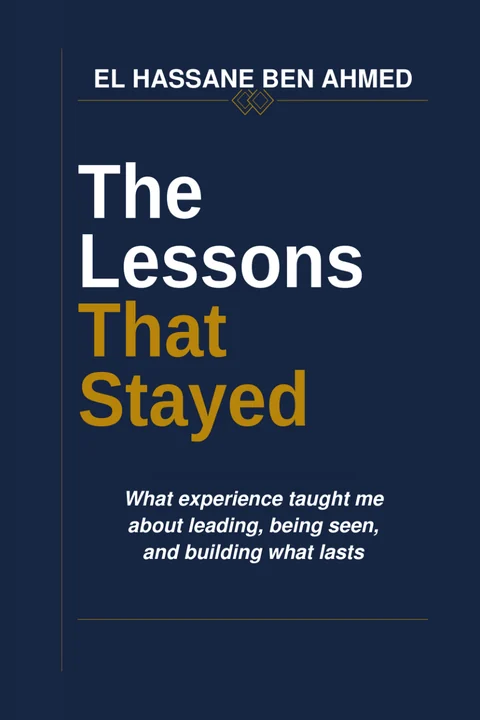
The book
Twenty chapters on recognition, culture, structure and performance.
By El Hassane Ben Ahmed. Kindle, paperback and hardcover, on Amazon in the United States, Canada and France.