A guide to the book
Leadership Lessons from History: 20 Figures and What They Teach About Work Today
Tesla, Rosalind Franklin, Lincoln, Mandela, Shackleton, Eisenhower and more: the historical figures that open the chapters of The Lessons That Stayed, and the workplace lessons each one illuminates.
Key takeaways
- History offers clear, well-documented versions of patterns most professionals meet at work: invisible contribution, stolen credit, fear-based leadership, unclear authority.
- The lesson is rarely “do what they did”. It is “understand why it worked, and ask what in your situation is structurally similar”.
- Many of the figures are remembered for their genius but were shaped as much by the systems around them: Tesla, Meitner, Franklin and Lovelace were all under-recognised in their time.
- The most effective leaders combined high standards with composure and dignity: Lincoln, Eisenhower, Mandela, Marshall.
- Each figure below links to the chapter article that develops the lesson.
On this page
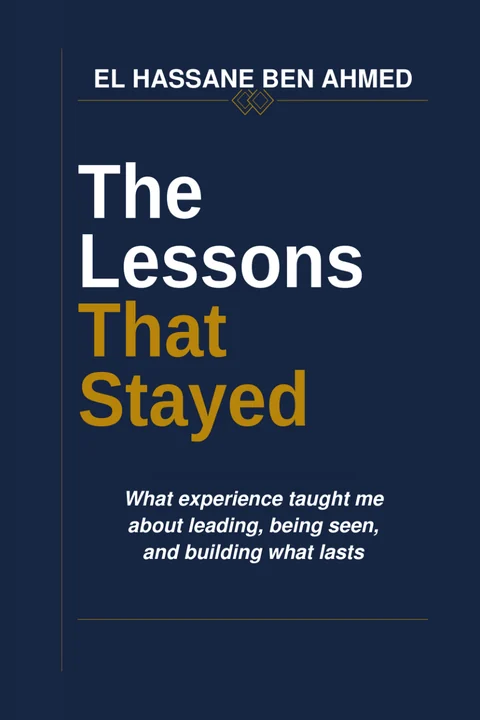
Every chapter of The Lessons That Stayed opens with two stories. The first is the author’s own: a situation El Hassane Ben Ahmed lived through in more than thirty years of leading teams. The second comes from history: a figure whose experience shows the same pattern more clearly, because it is complete and well documented.
The book is careful about what these stories are for. As the foreword puts it, the lesson is not “do what they did”. It is to understand why it worked, and to ask what in your own situation is structurally similar.
Below are twenty of those figures, grouped by the four parts of the book, with the lesson each one illuminates and a link to the article that develops it.
Recognition: being seen for what you contribute
Nikola Tesla: good work does not speak for itself
Tesla’s alternating current powers almost everything we plug in, yet he ended his life largely forgotten in a New York hotel room while Edison was celebrated. Tesla believed the quality of his work would speak for itself. Edison managed the story. Lesson: value is not only created but narrated. Read: Why good work goes unnoticed
Rosalind Franklin: attribution follows power
Franklin’s Photo 51 was shown to Watson and Crick without her knowledge and became the basis of their DNA model. By the time the Nobel Prize was awarded, she had died. Lesson: credit flows toward proximity to decision-makers and control of information. Read: When your manager takes credit for your work
Ada Lovelace: erasure is often the system’s default
Lovelace published the first computer program in 1843, in notes three times longer than the article she translated. It took more than a century of scholarship to establish what she had done. Lesson: the mechanisms that erase contribution are usually ordinary, not exceptional.
Francis Bacon: first impressions resist evidence
Bacon described the “idols of the mind”, including the tendency to bend all later evidence to fit a first opinion. Lesson: some workplace problems are perception problems, and more effort will not solve them. Read: When your manager has already decided about you
Seneca: time spent in the wrong place is the real waste
Seneca argued that life is not short; we waste much of it in conditions that do not match what we value or what we can do. Lesson: sometimes staying costs more than leaving. Read: Should you quit without another job lined up?
Nelson Mandela: standards are for who you become
For twenty-seven years in prison, Mandela kept his standards with no sign the outcome he worked for would ever arrive. Lesson: standards build identity, not only results, and they outlast the environment. Read: When you do everything right and it still does not work
Culture: the environments we build and endure
Frederick the Great and the Prussian reformers: compliance is not discipline
Frederick built a feared army through drilling and punishment. Napoleon destroyed it in a single day at Jena in 1806. Scharnhorst and Gneisenau rebuilt it around initiative. Lesson: fear produces movement, not performance. Read: Fear-based leadership
Abraham Lincoln: accountability without humiliation
Lincoln held his cabinet to high standards and replaced those who failed, while rarely humiliating anyone. Lesson: high standards and dignity reinforce each other.
Matteo Ricci: the playbook does not travel
Ricci arrived in China with a European approach to authority that produced only resistance. He learned the language, studied the classics and built trust through science. Lesson: effective leaders adapt their expression while keeping their essence. Read: Leading across cultures
John Adams: faction replaces merit quietly
Adams fought the tendency of groups in power to organise around loyalty and apply rules selectively. He largely lost. Lesson: once merit becomes optional, people start performing for belonging. Read: Proximity bias and favouritism at work
Machiavelli: the gap between word and deed gets noticed
Machiavelli advised rulers to appear to keep their word while reserving the right to break it. Lesson: inconsistency, once people learn to see it, cannot be unseen. Read: Inconsistent leadership
George Washington: apply the limit to yourself first
Washington’s voluntary decision to step down after two terms made his authority stronger, not weaker. Lesson: leadership is measured by the standards you accept for yourself. Read: Leaders who break their own rules
Structure: the architecture of authority
Procter and Gamble: write down who decides what
In 1837 the two founders put in writing who held authority over sales and who over manufacturing. Lesson: shared leadership works when decision rights are explicit before pressure arrives. Read: Co-management and shared leadership
Ulysses S. Grant: presence without disruption
Grant visited his commanders’ positions to observe and ask questions, not to take over. Napoleon visited to command, and his marshals lost the habit of independent judgement. Lesson: stay close to the work without going around the people responsible for it. Read: When senior leaders bypass their managers
Ernest Shackleton: name the uncertainty
When the Endurance was trapped in the ice in 1915, Shackleton told his crew exactly what had happened and adapted the plan for twenty-one months. Lesson: the most dangerous leader is the one who believes there is no decision to make. Read: Reading uncertainty in projects
Peter Drucker: manage for strength, not comfort
Drucker argued that effective executives ask what a person can do exceptionally well, not what they cannot do. Lesson: strong leaders keep capable people close even when personalities differ. Read: How to keep your best employees
Performance: what excellence requires
Dwight D. Eisenhower: clarity and ownership
Before D-Day, Eisenhower wrote a note taking full responsibility in case the landings failed. Through the setbacks of 1944 he kept the alliance steady by assessing, deciding and communicating clearly. Lesson: calm and clarity are leadership deliverables. Read: Empathy, strategy and authenticity
Winston Churchill: honesty without panic
In May 1940 Churchill told Parliament the truth about a catastrophic situation and still gave the country something to hold on to. Lesson: leadership in stable periods builds authority; in difficult periods it builds trust. Read: Leading in difficult times
Marie Curie: discipline, and the conditions that sustain it
Curie’s discipline is legendary, but she also built a laboratory that gave others what the establishment had denied her. Lesson: sustained excellence includes improving the conditions for others. Read: Excellence under pressure
Socrates: the difference between knowledge and its performance
Socrates spent his life separating real expertise from the Sophists’ convincing imitation of it. Lesson: judge advisers by the quality of their questions, not the polish of their answers. Read: The true cost of cheap consulting
Marcus Aurelius: character under pressure
Governing Rome through war and plague, Marcus Aurelius used the Meditations to keep his principles intact. Lesson: organisations, like people, are revealed by what they protect when protecting it is expensive. Read: What enduring organisations do differently
What the figures have in common
The historical figures in the book, the author writes, were not more talented or more fortunate than those who got it wrong. What they shared was attention: they paid genuine attention to what their experience was trying to teach them.
“The leaders who appear in these pages were not exceptional because they were born to lead. They were exceptional because they paid genuine attention to what their experience was trying to teach them. That capacity is not hereditary. It is a discipline.”
Frequently asked questions
Why use historical figures to learn about leadership?
Because their situations are well documented and their outcomes are known. A pattern that is hard to see in your own workplace, such as credit flowing to the most visible person, becomes obvious in the story of Rosalind Franklin or Nikola Tesla.
Which historical leaders are best for learning about leadership under pressure?
The Lessons That Stayed draws especially on Abraham Lincoln, Winston Churchill, Dwight D. Eisenhower, Ernest Shackleton and Marcus Aurelius for composure, clarity and decision-making when conditions are worst.
Should I copy what these leaders did?
No. The book is explicit that every figure acted in a specific context. The useful question is why their approach worked there, and which parts of your situation are structurally similar.
Sources
This guide is based on The Lessons That Stayed by El Hassane Ben Ahmed (2026). Quotations are from the book.
- Ben Ahmed, E.H. (2026) The Lessons That Stayed